
Smart Technologies Guarding the Oil & Gas Industry
In the oil and gas sector, where pipelines are the arteries carrying energy to the world, every minute of downtime or an accident costs millions. On the North Sea shelf, where waves crash against platforms and pipeline pressure reaches 2500 psi, equipment reliability means everything.
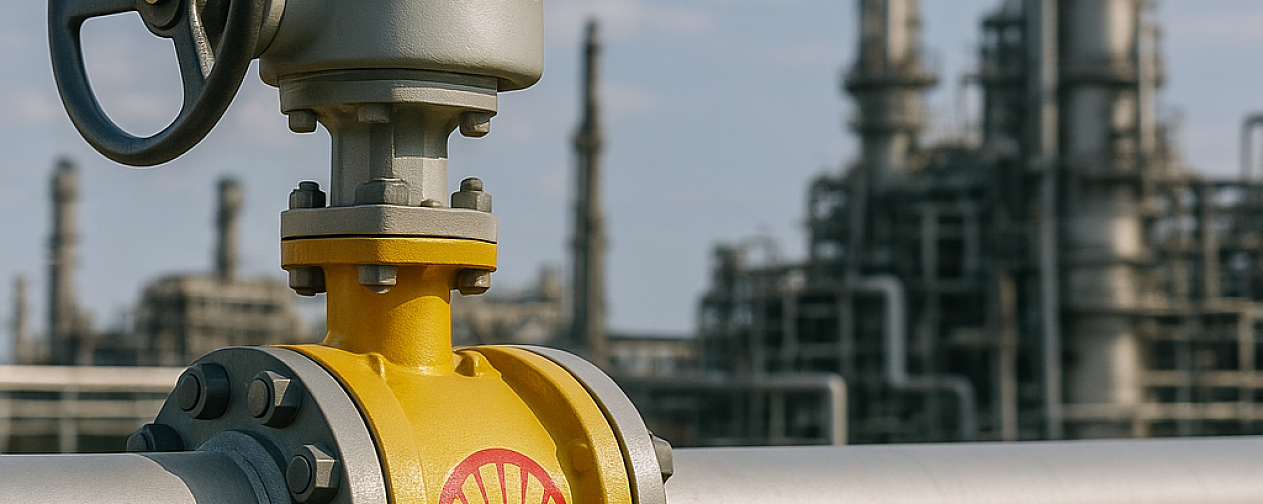
In 2024, Shell made a breakthrough by deploying intelligent valves compliant with ASME B16.34 on its Shearwaterplatform. Equipped with AI sensors, these valves predict failures with 95% accuracy, reducing emergency downtime by 20% and saving $5 million annually.
Intelligent valves are not just flow-control devices; they are the “brain” of a pipeline system—listening, analyzing, and acting. In this article, we’ll explore how these technologies work, their advantages, and why they are becoming the standard for oil and gas projects, from offshore platforms to Arctic fields in Russia.
Technology: AI-Enabled Valves
The intelligent valves used by Shell under ASME B16.34 are shut-off and regulating devices integrated with sensors and AI algorithms. Developed by Baker Hughes, they are certified to operate under pressures up to 2500 psi (17.2 MPa) and temperatures ranging from –40°C to +200°C, making them ideal for offshore and high-pressure systems.
How it works:
Sensors: Pressure, vibration, and temperature sensors capture real-time data (pressure ±0.1%, vibration up to 0.5 mm/s, temperature ±0.5°C).
AI Analysis: Machine-learning algorithms trained on 10 years of valve failure data detect anomalies like microcracks or seal wear, predicting failures up to 72 hours in advance.
Cloud Platform: Data is transmitted via secure 4G/5G connection to management systems (e.g., Aveva PI), where operators receive recommendations: “Replace seal in 48 hours” or “Reduce pressure by 10%.”
Automation: Valves can self-regulate flow or shut down in case of critical deviations, minimizing human intervention.
Technical specifications:
Material: 316L stainless steel or duplex for corrosion resistance
Diameter: 2–24 inches (50–600 mm)
Pressure: 150–2500 psi (ANSI Class 150–1500)
Power consumption: 20 W per valve, with backup batteries (up to 30 days)
Service life: 25 years, with sensor calibration every 2 years
Innovations
Predictive maintenance: AI reduces unplanned repairs by 30%, analyzing 1,000 parameters per second.
Cybersecurity: Data encrypted with AES-256, protecting against cyberattacks.
Compatibility: Valves integrate with existing SCADA systems, simplifying modernization.
Real Case: Shell Shearwater — $5 Million Savings
In February 2024, Shell installed 50 intelligent valves on a 12-inch, 2000 psi high-pressure gas pipeline at the Shearwater platform (North Sea). In April, the system detected abnormal vibration of 0.7 mm/s, indicating graphite seal wear. AI predicted failure within 60 hours, allowing operators to replace the seal in just 4 hours, avoiding an emergency shutdown.
Results after one year:
For Russia, this experience is highly relevant—similar conditions (high pressure, offshore environments) exist at Sakhalin-1 and the Prirazlomnoye field.
Benefits for the Oil & Gas Industry
Economic impact: Cost reduction of 15–25% via predictive maintenance (e.g., $5M/year savings at Shearwater with 50 valves).
Safety: Elimination of accident-related leaks, critical for offshore projects where repairs cost $500,000 per day.
Environmental: Reduced carbon emissions, aligned with ESG and ISO 14001 standards.
Compliance: ASME B16.34 certification ensures global compatibility, facilitating equipment exports.
Flexibility: Suitable for oil, gas, and multiphase systems—from offshore to refineries.
According to Baker Hughes, intelligent valves pay for themselves in 12–24 months and reduce OPEX by 20% over 15 years. This is crucial for Russian companies like Gazprom and Rosneft, seeking localized solutions under sanctions.
Applications: From the North Sea to the Arctic
Intelligent ASME B16.34 valves are applicable across a wide range of projects:
Offshore fields: Sakhalin-1, Prirazlomnoye, Caspian (Lukoil), where corrosion and pressure are extreme.
Gas pipelines: Power of Siberia, “Neverny Potok,” requiring long-distance monitoring.
LNG terminals: Yamal LNG, Arctic LNG-2, where precise flow control is critical at –162°C.
Petrochemicals: Refineries in Tatarstan (e.g., Nizhnekamsk), handling aggressive media.
In 2024, Rosneft tested similar valves at Sakhalin-1, reducing downtime by 10% ($2M savings). Deployment is planned for the Vostok Oil project, where 220 km of pipelines require modernization.
Challenges & Solutions
High cost: AI valves cost $10K–$50K vs. $5K for standard ones → localization reduces cost by 25%.
Integration complexity: Older pipelines need retrofits → modular adapters/software allow installation in 1–2 weeks.
Sanctions: Electronics import restrictions → Russian manufacturers (e.g., Milandr) localized 70% of components in 2024.
The Future of Pipelines Is Intelligent
The intelligent valves at Shearwater represent more than technology—they embody a new approach to the oil and gas industry. Like a brain, they anticipate, adapt, and protect—cutting costs, improving safety, and reducing environmental footprint.
With Shell’s success and early adoption in Russia, AI-enabled valves are becoming the standard for offshore and Arctic projects. In an era of digitalization, where every drop of oil and gas counts, intelligent valves are the key to efficiency and sustainability.
Source: Based on Shell’s case study (World Oil) and Baker Hughes technical review (SPE.org).
In the oil and gas sector, where pipelines are the arteries carrying energy to the world, every minute of downtime or an accident costs millions. On the North Sea shelf, where waves crash against platforms and pipeline pressure reaches 2500 psi, equipment reliability means everything.
In 2024, Shell made a breakthrough by deploying intelligent valves compliant with ASME B16.34 on its Shearwaterplatform. Equipped with AI sensors, these valves predict failures with 95% accuracy, reducing emergency downtime by 20% and saving $5 million annually.
Intelligent valves are not just flow-control devices; they are the “brain” of a pipeline system—listening, analyzing, and acting. In this article, we’ll explore how these technologies work, their advantages, and why they are becoming the standard for oil and gas projects, from offshore platforms to Arctic fields in Russia.
Technology: AI-Enabled Valves
The intelligent valves used by Shell under ASME B16.34 are shut-off and regulating devices integrated with sensors and AI algorithms. Developed by Baker Hughes, they are certified to operate under pressures up to 2500 psi (17.2 MPa) and temperatures ranging from –40°C to +200°C, making them ideal for offshore and high-pressure systems.
How it works:
Sensors: Pressure, vibration, and temperature sensors capture real-time data (pressure ±0.1%, vibration up to 0.5 mm/s, temperature ±0.5°C).
AI Analysis: Machine-learning algorithms trained on 10 years of valve failure data detect anomalies like microcracks or seal wear, predicting failures up to 72 hours in advance.
Cloud Platform: Data is transmitted via secure 4G/5G connection to management systems (e.g., Aveva PI), where operators receive recommendations: “Replace seal in 48 hours” or “Reduce pressure by 10%.”
Automation: Valves can self-regulate flow or shut down in case of critical deviations, minimizing human intervention.
Technical specifications:
Material: 316L stainless steel or duplex for corrosion resistance
Diameter: 2–24 inches (50–600 mm)
Pressure: 150–2500 psi (ANSI Class 150–1500)
Power consumption: 20 W per valve, with backup batteries (up to 30 days)
Service life: 25 years, with sensor calibration every 2 years
Innovations
Predictive maintenance: AI reduces unplanned repairs by 30%, analyzing 1,000 parameters per second.
Cybersecurity: Data encrypted with AES-256, protecting against cyberattacks.
Compatibility: Valves integrate with existing SCADA systems, simplifying modernization.
Real Case: Shell Shearwater — $5 Million Savings
In February 2024, Shell installed 50 intelligent valves on a 12-inch, 2000 psi high-pressure gas pipeline at the Shearwater platform (North Sea). In April, the system detected abnormal vibration of 0.7 mm/s, indicating graphite seal wear. AI predicted failure within 60 hours, allowing operators to replace the seal in just 4 hours, avoiding an emergency shutdown.
Results after one year:
- Downtime reduced by 20% (from 120 to 96 hours), boosting gas output by 1.5 million cubic meters
- Savings: $3M in accident prevention, $2M in optimized maintenance
- Safety: Zero leaks, preventing 10,000 tons of CO₂ emissions
- Reliability: 98% of valves operated without failures
For Russia, this experience is highly relevant—similar conditions (high pressure, offshore environments) exist at Sakhalin-1 and the Prirazlomnoye field.
Benefits for the Oil & Gas Industry
Economic impact: Cost reduction of 15–25% via predictive maintenance (e.g., $5M/year savings at Shearwater with 50 valves).
Safety: Elimination of accident-related leaks, critical for offshore projects where repairs cost $500,000 per day.
Environmental: Reduced carbon emissions, aligned with ESG and ISO 14001 standards.
Compliance: ASME B16.34 certification ensures global compatibility, facilitating equipment exports.
Flexibility: Suitable for oil, gas, and multiphase systems—from offshore to refineries.
According to Baker Hughes, intelligent valves pay for themselves in 12–24 months and reduce OPEX by 20% over 15 years. This is crucial for Russian companies like Gazprom and Rosneft, seeking localized solutions under sanctions.
Applications: From the North Sea to the Arctic
Intelligent ASME B16.34 valves are applicable across a wide range of projects:
Offshore fields: Sakhalin-1, Prirazlomnoye, Caspian (Lukoil), where corrosion and pressure are extreme.
Gas pipelines: Power of Siberia, “Neverny Potok,” requiring long-distance monitoring.
LNG terminals: Yamal LNG, Arctic LNG-2, where precise flow control is critical at –162°C.
Petrochemicals: Refineries in Tatarstan (e.g., Nizhnekamsk), handling aggressive media.
In 2024, Rosneft tested similar valves at Sakhalin-1, reducing downtime by 10% ($2M savings). Deployment is planned for the Vostok Oil project, where 220 km of pipelines require modernization.
Challenges & Solutions
High cost: AI valves cost $10K–$50K vs. $5K for standard ones → localization reduces cost by 25%.
Integration complexity: Older pipelines need retrofits → modular adapters/software allow installation in 1–2 weeks.
Sanctions: Electronics import restrictions → Russian manufacturers (e.g., Milandr) localized 70% of components in 2024.
The Future of Pipelines Is Intelligent
The intelligent valves at Shearwater represent more than technology—they embody a new approach to the oil and gas industry. Like a brain, they anticipate, adapt, and protect—cutting costs, improving safety, and reducing environmental footprint.
With Shell’s success and early adoption in Russia, AI-enabled valves are becoming the standard for offshore and Arctic projects. In an era of digitalization, where every drop of oil and gas counts, intelligent valves are the key to efficiency and sustainability.
Source: Based on Shell’s case study (World Oil) and Baker Hughes technical review (SPE.org).