
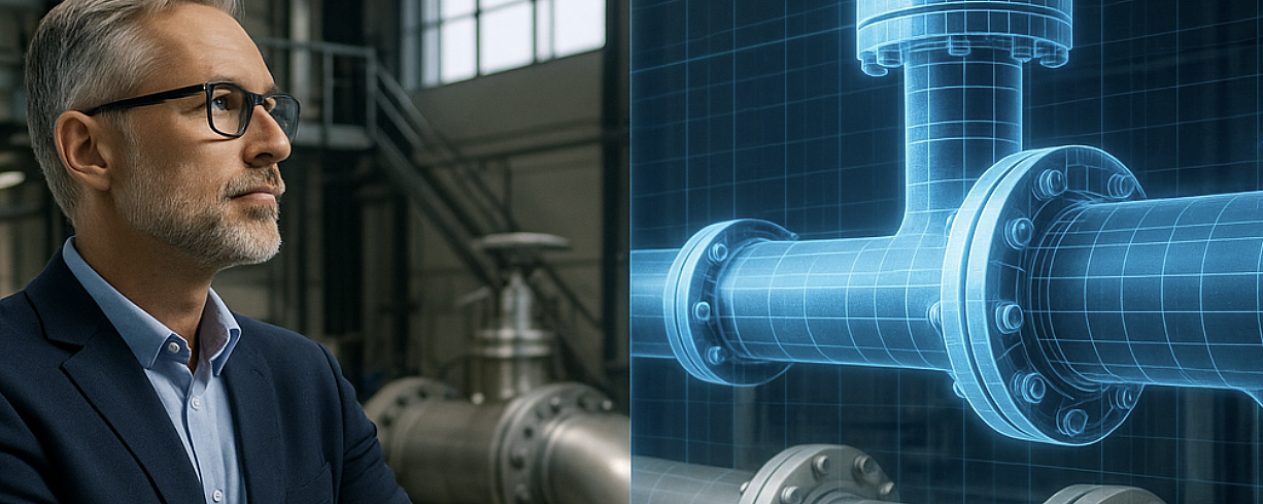
Carbon capture, utilization, and storage (CCUS) technologies are becoming a vital tool in the fight against climate change, especially in the oil & gas and chemical industries. Pressure equipment, including vessels and pipelines, plays a key role in these processes, ensuring the safe storage and transportation of carbon dioxide (CO₂). ASME standards, in particular the ASME Boiler & Pressure Vessel Code (BPVC), set strict requirements for the design and operation of such equipment, guaranteeing reliability and safety.
Why is CCUS Important for Industry?
Global context: Carbon capture is critical for achieving the goals of the Paris Agreement aimed at reducing CO₂ emissions. Oil, gas, and chemical facilities such as refineries and cement plants use CCUS to capture CO₂ from flue gases for storage or utilization.
Role of equipment: CCUS processes require specialized equipment capable of operating at high pressures (up to 150 bar) and under aggressive conditions caused by high CO₂ concentrations. ASME-certified pressure vessels, pipelines, and tanks ensure the safety and efficiency of these processes.
Environmental significance: CCUS implementation could reduce CO₂ emissions in energy and industry by 20–40% by 2030. In 2025, CCUS technologies are becoming a central pathway for companies pursuing decarbonization.
How Do ASME Standards Ensure Reliability?
Pressure vessel design: ASME Section VIII, Divisions 1 & 2 regulate the design of vessels for high-pressure CO₂ storage. Standards define requirements for wall thickness, strength, and corrosion resistance, especially in liquid or supercritical CO₂.
Welding and materials: ASME Section IX sets welding procedure requirements, ensuring leak-tight joints in pipelines and vessels. Corrosion-resistant materials are used, such as carbon steel with protective coatings or stainless steel 304L.
Nondestructive testing (NDT): ASME Section V describes testing methods, including ultrasonic and radiographic inspection, to detect microcracks and defects. This is critical in CCUS systems where leaks can have severe environmental consequences.
International recognition: ASME certification simplifies the adoption of equipment in global CCUS projects in Norway, the USA, and Australia, where ASME standards are a benchmark for safety.
Innovations in CCUS Equipment
Compact pressure vessels: New ASME-certified designs enable CO₂ storage in supercritical state, reducing equipment volume and cutting capital costs by 10–15%.
Anti-corrosion technologies: Innovative epoxy and polymer coatings protect equipment from wet CO₂-induced corrosion, extending service life up to 30 years.
Digital integration: IoT and digital platforms enable real-time monitoring of pressure, temperature, and integrity, preventing up to 90% of potential failures.
Modular systems: Modular pipelines and vessels simplify transport and installation, especially for remote underground CO₂ storage projects.
Examples of Successful Projects
Northern Lights (Norway): ASME-certified vessels and pipelines transport and store CO₂ in subsea reservoirs in the North Sea, ensuring safety and reliability.
Texas, USA: A refinery uses compact ASME pressure vessels to capture CO₂ from flue gases, reducing emissions by 1 million tons per year.
Pilot project in Australia: ASME-certified pipelines transport CO₂ to underground storage, demonstrating corrosion resistance and high-pressure performance.
Challenges in CCUS Implementation
CO₂ corrosion: Wet CO₂ environments accelerate corrosion, requiring specialized materials and coatings, increasing equipment cost.
Scalability: Most CCUS projects remain at pilot scale; moving to large-scale deployment demands significant investment and certification.
Regulatory differences: Harmonizing ASME standards with international norms such as ISO remains a challenge for global CCUS projects.
Source: Carbon Capture Journal (carboncapturejournal.com), ASME Standards (asme.org), International Energy Agency (iea.org)
Why is CCUS Important for Industry?
Global context: Carbon capture is critical for achieving the goals of the Paris Agreement aimed at reducing CO₂ emissions. Oil, gas, and chemical facilities such as refineries and cement plants use CCUS to capture CO₂ from flue gases for storage or utilization.
Role of equipment: CCUS processes require specialized equipment capable of operating at high pressures (up to 150 bar) and under aggressive conditions caused by high CO₂ concentrations. ASME-certified pressure vessels, pipelines, and tanks ensure the safety and efficiency of these processes.
Environmental significance: CCUS implementation could reduce CO₂ emissions in energy and industry by 20–40% by 2030. In 2025, CCUS technologies are becoming a central pathway for companies pursuing decarbonization.
How Do ASME Standards Ensure Reliability?
Pressure vessel design: ASME Section VIII, Divisions 1 & 2 regulate the design of vessels for high-pressure CO₂ storage. Standards define requirements for wall thickness, strength, and corrosion resistance, especially in liquid or supercritical CO₂.
Welding and materials: ASME Section IX sets welding procedure requirements, ensuring leak-tight joints in pipelines and vessels. Corrosion-resistant materials are used, such as carbon steel with protective coatings or stainless steel 304L.
Nondestructive testing (NDT): ASME Section V describes testing methods, including ultrasonic and radiographic inspection, to detect microcracks and defects. This is critical in CCUS systems where leaks can have severe environmental consequences.
International recognition: ASME certification simplifies the adoption of equipment in global CCUS projects in Norway, the USA, and Australia, where ASME standards are a benchmark for safety.
Innovations in CCUS Equipment
Compact pressure vessels: New ASME-certified designs enable CO₂ storage in supercritical state, reducing equipment volume and cutting capital costs by 10–15%.
Anti-corrosion technologies: Innovative epoxy and polymer coatings protect equipment from wet CO₂-induced corrosion, extending service life up to 30 years.
Digital integration: IoT and digital platforms enable real-time monitoring of pressure, temperature, and integrity, preventing up to 90% of potential failures.
Modular systems: Modular pipelines and vessels simplify transport and installation, especially for remote underground CO₂ storage projects.
Examples of Successful Projects
Northern Lights (Norway): ASME-certified vessels and pipelines transport and store CO₂ in subsea reservoirs in the North Sea, ensuring safety and reliability.
Texas, USA: A refinery uses compact ASME pressure vessels to capture CO₂ from flue gases, reducing emissions by 1 million tons per year.
Pilot project in Australia: ASME-certified pipelines transport CO₂ to underground storage, demonstrating corrosion resistance and high-pressure performance.
Challenges in CCUS Implementation
CO₂ corrosion: Wet CO₂ environments accelerate corrosion, requiring specialized materials and coatings, increasing equipment cost.
Scalability: Most CCUS projects remain at pilot scale; moving to large-scale deployment demands significant investment and certification.
Regulatory differences: Harmonizing ASME standards with international norms such as ISO remains a challenge for global CCUS projects.
Source: Carbon Capture Journal (carboncapturejournal.com), ASME Standards (asme.org), International Energy Agency (iea.org)