
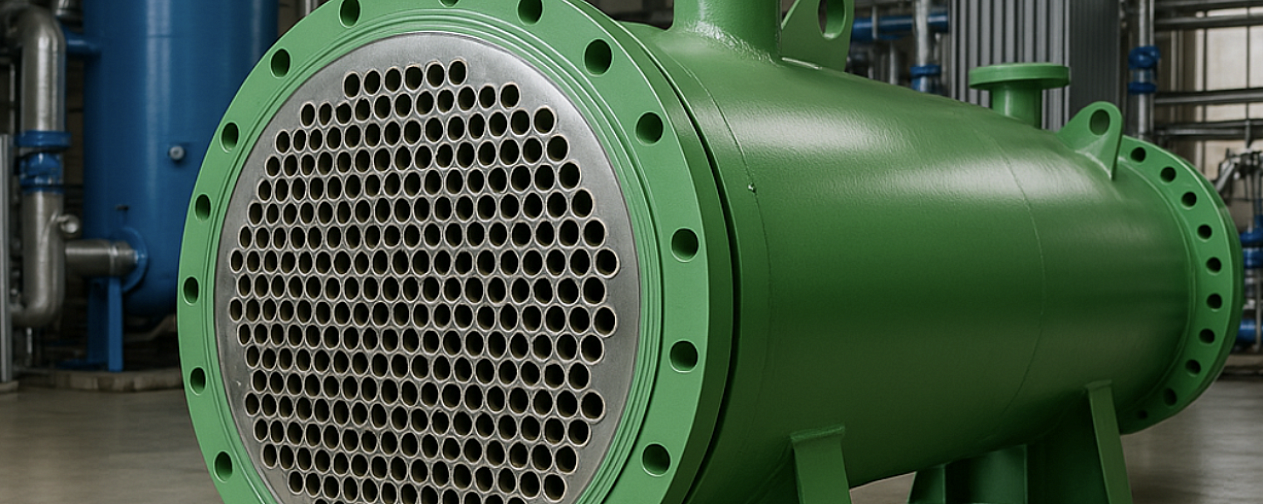
In the chemical industry, heat exchangers play a key role, ensuring efficient heat transfer in the production of polymers, fertilizers, and other chemical products. With advancing technologies and a global focus on sustainability, innovations in heat exchangers are becoming increasingly important. The ASME standards—particularly the ASME Boiler & Pressure Vessel Code (BPVC)—set benchmarks for the design, manufacturing, and operation of these devices, guaranteeing their safety and reliability. This article explores how new ASME-certified heat exchanger designs enhance energy efficiency and support sustainable development, offering a fresh perspective on their role in the chemical sector in 2025.
Why Heat Exchangers Matter in the Chemical Industry
Producing chemicals such as ammonia, methanol, or polyethylene requires precise control of temperature and pressure. Heat exchangers are the heart of these processes, transferring heat between liquid or gas streams. Modern challenges—such as rising energy costs and the need to reduce carbon footprints—are pushing the industry toward more efficient solutions.
Technical features: Traditional heat exchangers, such as shell-and-tube or plate types, face limitations, including low efficiency in aggressive environments and high energy consumption. New ASME Section VIII–certified designs address these issues, offering improved heat transfer performance and enhanced corrosion resistance.
Environmental aspect: In 2025, the chemical industry is striving toward sustainability goals, including reducing CO₂ emissions. Innovative heat exchangers can lower energy consumption by 25–30%, directly contributing to decarbonization.
How ASME Standards Drive Innovation
Safety and reliability: ASME Section VIII, Divisions 1 and 2, sets strict requirements for the design of pressure-containing heat exchangers, including strength calculations, resistance to thermal loads, and material selection (e.g., 316L stainless steel or titanium alloys) for aggressive environments like acid production.
Welding and quality control: ASME Section IX regulates welding procedures, ensuring leak-tight and durable joints. Non-destructive testing (NDT), outlined in ASME Section V, includes ultrasonic testing and radiography to detect defects.
Global certification: ASME certification simplifies the use of heat exchangers in international markets such as the U.S., EU, and Asia, where safety standards are mandatory. This makes the equipment competitive in global projects.
Innovations Transforming the Industry
Compact designs: New microchannel and spiral models deliver up to 30% higher heat transfer efficiency compared to traditional shell-and-tube systems. Their compactness makes them suitable for small-scale chemical plants.
Advanced materials: Graphene coatings and high-strength alloys improve corrosion resistance, extending service life to 25 years, even in harsh conditions such as sulfuric acid production.
Digital technologies: IoT-based monitoring systems enable real-time performance tracking, wear prediction, and energy optimization. For instance, digital platforms can cut downtime by 15% through predictive maintenance.
Energy efficiency: New designs with optimized channel geometry and heat transfer surfaces reduce heating and cooling costs, which is critical for energy-intensive processes like ammonia production.
Real-World Applications
Polymer production in Germany: At a polyethylene plant in Ludwigshafen, compact ASME-certified heat exchangers reduced energy consumption by 20% and increased line productivity by 10%.
Fertilizers in the U.S.: In Louisiana, titanium-coated ASME Section VIII heat exchangers are used for nitrogen fertilizer production, ensuring corrosion resistance and durability.
Biochemistry in Brazil: Plate-type ASME-certified heat exchangers are applied in bioethanol production, optimizing heat transfer during fermentation and reducing CO₂ emissions.
Challenges and Solutions
Biocorrosion: Organic compounds and bacteria in biochemical processes accelerate corrosion, requiring specialized materials and coatings. ASME standards support the selection of suitable alloys and protection methods.
High costs: Designing and certifying ASME equipment requires significant investment, but long-term benefits—such as reduced operating expenses—offset the costs. For example, energy-efficient heat exchangers typically pay back within 3–5 years.
Standards harmonization: Differences between ASME and European EN standards can complicate certification. In 2025, efforts are expected to align regulations to simplify international supply chains.
Looking Ahead: 2025 and Beyond
By 2025, the chemical industry’s heat exchanger market is projected to grow by 7% annually, driven by demand for energy-efficient and sustainable solutions. Innovations such as nanostructured exchangers and integrated digital systems will become the standard for new projects. Events like the AIChE Annual Meeting 2025 (scheduled for November 2025 in Boston) will showcase prototypes with enhanced heat transfer and automation features.
ASME standards will continue to play a key role in supporting the development of safe and sustainable equipment. Updates to the ASME BPVC 2025 are expected to strengthen requirements for materials and testing, making heat exchangers more reliable under high-stress conditions. These changes will help the chemical industry meet global carbon-reduction goals.
Value for Professionals
ASME-certified heat exchangers open new opportunities for the chemical industry by combining innovation with safety and sustainability. For engineers and manufacturers, mastering ASME standards and modern heat transfer technologies is key to creating competitive solutions. Forums like the AIChE Annual Meeting provide a platform for knowledge exchange and insights into cutting-edge developments shaping the industry’s future.
In the era of sustainability, heat exchangers are no longer just technical components—they are tools for achieving both environmental and economic goals.
Sources: Chemical Engineering Progress (aiche.org), ASME Standards (asme.org), Journal of Heat Transfer (asmedigitalcollection.asme.org)
Why Heat Exchangers Matter in the Chemical Industry
Producing chemicals such as ammonia, methanol, or polyethylene requires precise control of temperature and pressure. Heat exchangers are the heart of these processes, transferring heat between liquid or gas streams. Modern challenges—such as rising energy costs and the need to reduce carbon footprints—are pushing the industry toward more efficient solutions.
Technical features: Traditional heat exchangers, such as shell-and-tube or plate types, face limitations, including low efficiency in aggressive environments and high energy consumption. New ASME Section VIII–certified designs address these issues, offering improved heat transfer performance and enhanced corrosion resistance.
Environmental aspect: In 2025, the chemical industry is striving toward sustainability goals, including reducing CO₂ emissions. Innovative heat exchangers can lower energy consumption by 25–30%, directly contributing to decarbonization.
How ASME Standards Drive Innovation
Safety and reliability: ASME Section VIII, Divisions 1 and 2, sets strict requirements for the design of pressure-containing heat exchangers, including strength calculations, resistance to thermal loads, and material selection (e.g., 316L stainless steel or titanium alloys) for aggressive environments like acid production.
Welding and quality control: ASME Section IX regulates welding procedures, ensuring leak-tight and durable joints. Non-destructive testing (NDT), outlined in ASME Section V, includes ultrasonic testing and radiography to detect defects.
Global certification: ASME certification simplifies the use of heat exchangers in international markets such as the U.S., EU, and Asia, where safety standards are mandatory. This makes the equipment competitive in global projects.
Innovations Transforming the Industry
Compact designs: New microchannel and spiral models deliver up to 30% higher heat transfer efficiency compared to traditional shell-and-tube systems. Their compactness makes them suitable for small-scale chemical plants.
Advanced materials: Graphene coatings and high-strength alloys improve corrosion resistance, extending service life to 25 years, even in harsh conditions such as sulfuric acid production.
Digital technologies: IoT-based monitoring systems enable real-time performance tracking, wear prediction, and energy optimization. For instance, digital platforms can cut downtime by 15% through predictive maintenance.
Energy efficiency: New designs with optimized channel geometry and heat transfer surfaces reduce heating and cooling costs, which is critical for energy-intensive processes like ammonia production.
Real-World Applications
Polymer production in Germany: At a polyethylene plant in Ludwigshafen, compact ASME-certified heat exchangers reduced energy consumption by 20% and increased line productivity by 10%.
Fertilizers in the U.S.: In Louisiana, titanium-coated ASME Section VIII heat exchangers are used for nitrogen fertilizer production, ensuring corrosion resistance and durability.
Biochemistry in Brazil: Plate-type ASME-certified heat exchangers are applied in bioethanol production, optimizing heat transfer during fermentation and reducing CO₂ emissions.
Challenges and Solutions
Biocorrosion: Organic compounds and bacteria in biochemical processes accelerate corrosion, requiring specialized materials and coatings. ASME standards support the selection of suitable alloys and protection methods.
High costs: Designing and certifying ASME equipment requires significant investment, but long-term benefits—such as reduced operating expenses—offset the costs. For example, energy-efficient heat exchangers typically pay back within 3–5 years.
Standards harmonization: Differences between ASME and European EN standards can complicate certification. In 2025, efforts are expected to align regulations to simplify international supply chains.
Looking Ahead: 2025 and Beyond
By 2025, the chemical industry’s heat exchanger market is projected to grow by 7% annually, driven by demand for energy-efficient and sustainable solutions. Innovations such as nanostructured exchangers and integrated digital systems will become the standard for new projects. Events like the AIChE Annual Meeting 2025 (scheduled for November 2025 in Boston) will showcase prototypes with enhanced heat transfer and automation features.
ASME standards will continue to play a key role in supporting the development of safe and sustainable equipment. Updates to the ASME BPVC 2025 are expected to strengthen requirements for materials and testing, making heat exchangers more reliable under high-stress conditions. These changes will help the chemical industry meet global carbon-reduction goals.
Value for Professionals
ASME-certified heat exchangers open new opportunities for the chemical industry by combining innovation with safety and sustainability. For engineers and manufacturers, mastering ASME standards and modern heat transfer technologies is key to creating competitive solutions. Forums like the AIChE Annual Meeting provide a platform for knowledge exchange and insights into cutting-edge developments shaping the industry’s future.
In the era of sustainability, heat exchangers are no longer just technical components—they are tools for achieving both environmental and economic goals.
Sources: Chemical Engineering Progress (aiche.org), ASME Standards (asme.org), Journal of Heat Transfer (asmedigitalcollection.asme.org)