
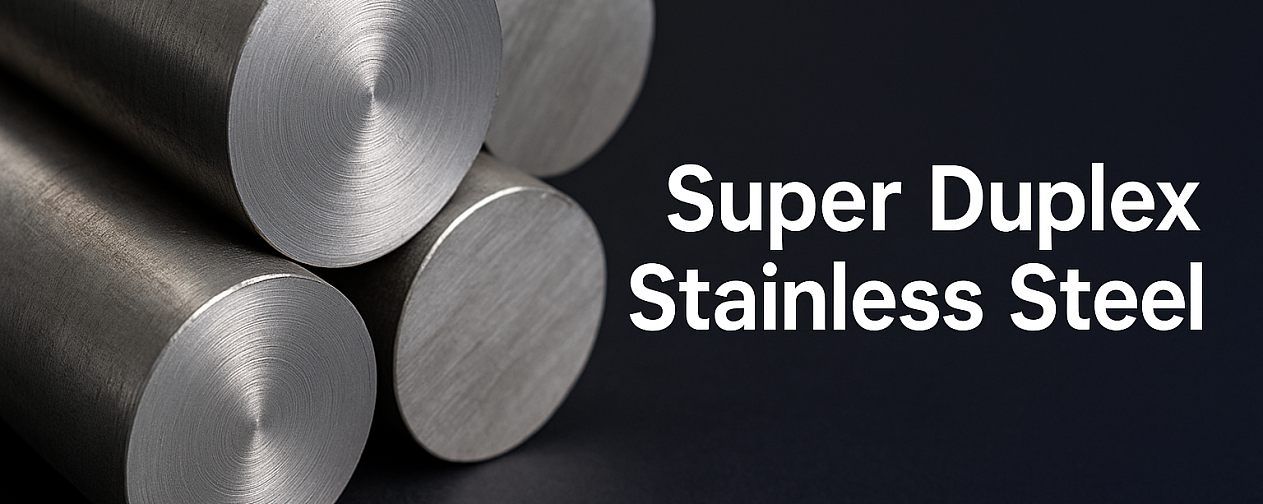
Super Duplex stainless steels represent a highly alloyed and high-performance subgroup within the duplex stainless steel family. Due to their increased content of alloying elements, they offer significantly higher corrosion resistance and strength compared to standard duplex and austenitic stainless steels.
Chemical Composition of Super Duplex Stainless Steel (SDSS)
The chemical composition of super duplex steels is optimized to achieve maximum corrosion resistance and mechanical strength. Key elements include:
-
Chromium (24–28%) — provides corrosion and oxidation resistance
-
Nickel (6–8%) — improves ductility, strength, and resistance to stress corrosion cracking
-
Molybdenum (3–4%) — enhances pitting and crevice corrosion resistance
-
Nitrogen (0.24–0.32%) — increases strength and resistance to localized corrosion
-
Carbon (<0.03%) — reduces the risk of carbide precipitation during welding
-
Additional elements: manganese, silicon, iron, and small amounts of copper
While exact compositions vary depending on application requirements, super duplex steels typically contain high levels of chromium, molybdenum, and nitrogen, which together deliver exceptional corrosion resistance and high strength.
Popular Grades of Super Duplex Stainless Steel
Super duplex grades are available in several standardized compositions:
-
UNS S32205 (Duplex 2205) — a balanced duplex grade offering good strength and corrosion resistance; commonly used in pipelines, pressure vessels, and marine systems
-
UNS S32750 (Super Duplex 2507) — highly resistant to chloride corrosion; widely used on offshore platforms, desalination plants, and in chemical processing
-
UNS S32760 (Super Duplex Zeron 100) — known for superior strength and corrosion resistance, especially effective in sour service and highly corrosive environments
Each grade is selected based on service conditions, medium chemistry, operating pressure, and temperature.
Advantages of Super Duplex Stainless Steel
Super duplex stainless steels offer several significant benefits:
-
High mechanical strength for reliable performance under shock and dynamic loading
-
Exceptional resistance to pitting and crevice corrosion
-
Strong resistance to stress corrosion cracking (SCC)
-
Outstanding chloride resistance, crucial for offshore and marine environments
-
Excellent resistance to sulfide stress corrosion in H₂S environments (sour service)
-
Good weldability and formability
-
Extended service life and high operational reliability
These advantages make SDSS an excellent choice for critical components operating under high pressure and in aggressive industrial environments.
Comparison of Duplex and Super Duplex Stainless Steel
1. Composition
Standard duplex stainless steels contain moderate levels of chromium, molybdenum, and nitrogen.
Super duplex grades feature significantly higher alloy content, especially chromium and nitrogen, providing greater strength and corrosion resistance.
2. Corrosion resistance
Duplex steel offers good corrosion resistance in many industrial environments.
Super duplex steel delivers much higher resistance to pitting, crevice corrosion, and chloride-rich environments. With a PREN > 40, it is ideal for seawater, H₂S exposure, and high-chloride conditions.
3. Strength
Duplex steel already provides high mechanical strength.
Super duplex steel surpasses it with higher yield and tensile strength, superior performance under impact and dynamic loading, and better suitability for deep-water and high-pressure environments.
4. Applications
Duplex is used in moderately aggressive environments such as onshore pipelines, water treatment systems, mid-level chemical processes, and construction.
Super duplex is used in extremely corrosive and high-load environments: subsea pipelines, offshore platforms, desalination plants, chemical reactors, and deep-water systems.
5. Cost
Duplex stainless steel is more economical and widely available.
Super duplex is more expensive due to higher alloy content, but its extended service life and reduced maintenance costs make it cost-effective over the equipment’s lifecycle.
When to Choose Super Duplex Stainless Steel
Super duplex is the preferred choice when:
-
equipment operates in highly corrosive environments
-
service conditions involve high pressure or extreme temperatures
-
maximum durability and reliability are required
-
the project involves offshore, subsea, or marine systems
Conclusion
Super duplex stainless steel is a material engineered for the harshest operating conditions, where maximum strength and corrosion resistance are essential. Its high chromium, molybdenum, and nitrogen content allows it to outperform standard duplex steels and ensure long service life in marine, oil and gas, and chemically aggressive environments. Despite its higher initial cost, super duplex justifies the investment by delivering superior reliability and minimal maintenance expenses.