
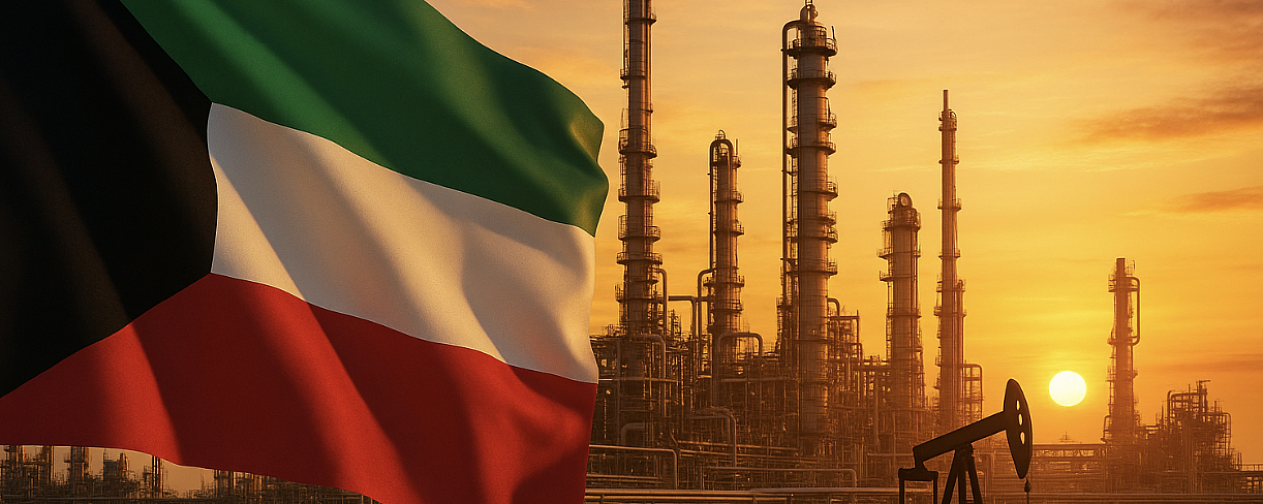
Kuwait is entering a new era of oil and gas sector development, allocating $97.6 billion for the modernization and expansion of infrastructure under its ambitious Vision 2035 program.
Approved in March 2025, the 2025–2026 fiscal budget includes large-scale projects such as the construction of new refineries, expansion of the Al-Zour Refinery Complex, and the development of LNG import terminals.
These initiatives—implemented in compliance with ASME standards to ensure equipment safety and reliability—aim to strengthen Kuwait’s position as a leading energy exporter while promoting economic diversification.
Strategic Importance of Vision 2035
Context and Objectives:
Launched in 2017, Vision 2035 seeks to transform Kuwait from an oil-dependent economy into a diversified regional financial and trade hub. Despite diversification goals, the oil and gas sector remains the backbone of the economy, accounting for nearly 90% of export revenues.
According to ResearchAndMarkets.com, Kuwait’s construction sector, including oil and gas projects, is expected to grow by 4.5% in 2025, maintaining an average annual growth rate of 5.1% through 2029.
Scale of Investment:
The 2025–2026 budget, approved in March 2025, includes raising the national debt ceiling to 30 billion Kuwaiti dinars ($97.6 billion) to finance large-scale infrastructure projects.
A substantial portion of these funds is directed toward the oil and gas industry, including upgrades of existing facilities and construction of new ones.
Economic Impact:
These investments will create thousands of jobs, stimulate related sectors such as equipment manufacturing and construction, and reinforce Kuwait’s position in the global energy market.
They also align with OPEC+ goals for production stabilization, with output projected to increase by 411,000 barrels per day in July 2025.
Key Oil and Gas Infrastructure Projects
Expansion of the Al-Zour Refinery:
The Al-Zour Refinery, one of the largest in the world, continues to expand its capacity. The completion of its third phase in 2025 will increase processing to 615,000 barrels per day.
ASME-certified pressure vessels and pipelines are used for heavy crude processing, minimizing environmental impact.
LNG Import Terminals:
Kuwait is investing in new LNG terminals to ensure energy security and offset seasonal demand fluctuations.
These facilities feature ASME BPVC Section VIII-compliant tanks and storage systems designed to operate under high pressure and cryogenic temperatures.
Pipeline Modernization:
Pipeline network expansion projects are focused on improving export capacity and optimizing oil and gas transport.
Fittings, valves, and joints are certified under ASME Section IX, ensuring reliability and longevity.
Environmental Initiatives:
Under Vision 2035, Kuwait is deploying carbon capture and storage (CCS) technologies at refineries, using ASME-compliant equipment for safe CO₂ containment—supporting national decarbonization goals.
The Role of ASME Standards in Projects
Safety and Design:
The ASME Boiler & Pressure Vessel Code (BPVC) Section VIII governs the design of pressure vessels and tanks used at the Al-Zour refinery and LNG terminals.
These standards ensure resistance to pressures up to 100 bar and corrosion from sulfur compounds.
Welding and Materials:
ASME Section IX defines welding procedures that guarantee leak-proof joints in pipelines and pressure vessels.
High-strength materials, such as carbon steel with anti-corrosion coatings, are used for aggressive operating conditions.
Nondestructive Testing (NDT):
ASME Section V regulates testing methods—including ultrasonic and radiographic inspection—to detect defects and prevent equipment failure.
This is vital for major facilities such as Al-Zour.
Global Certification:
ASME certification facilitates the export of technologies and equipment used in Kuwaiti projects to international markets, including Gulf Cooperation Council (GCC) countries and Asia.
Challenges and Risks
Economic Dependence on Oil:
Despite diversification goals, Kuwait’s heavy reliance on oil revenues makes it vulnerable to price volatility.
The IEA predicts a decline in oil prices in 2025, which could constrain project funding.
Technical Complexity:
Large-scale projects such as the Al-Zour refinery require precision engineering and highly skilled specialists.
Supply chain delays, as seen with some components in 2024, could slow implementation.
Environmental Demands:
Pressure from international organizations to reduce emissions compels Kuwait to invest heavily in costly CCS technologies.
ASME standards help mitigate these risks by ensuring equipment reliability and safety.
Outlook for 2025–2029
Infrastructure Growth:
According to ResearchAndMarkets.com, Kuwait’s oil and gas projects will sustain construction sector growth of 5.1% annually through 2029, strengthening the country’s role in OPEC+ and expanding exports to China and India.
Technological Development:
The adoption of digital technologies, such as IoT for equipment monitoring and ASME-certified systems, will enhance operational efficiency and safety.
For example, the Al-Zour refinery plans to introduce digital twins to optimize processes.
International Forums:
ADIPEC 2025, scheduled for November 3–6 in Abu Dhabi, will serve as a platform for Kuwait to showcase its progress.
Presentations will include new LNG storage systems and CCS technologies certified to ASME standards.
Environmental Transformation:
Investments in CCS and energy-efficient technologies will help Kuwait meet its emission-reduction targets and support global decarbonization efforts.
Sources: ResearchAndMarkets.com via Yahoo Finance (finance.yahoo.com), Kuwait News Agency (kuna.net.kw), ADIPEC (adipec.com), ASME Standards (asme.org)